
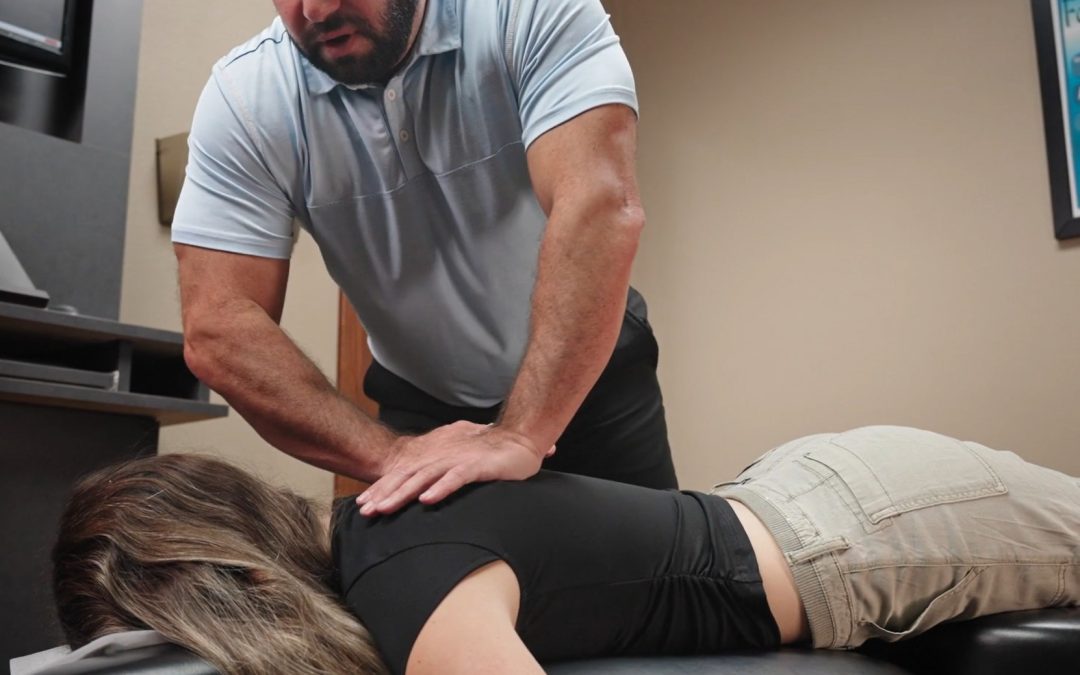
Herniated Disc Treatment Near Me: What to Expect During Your First Visit
You’ve likely spent the last few nights tossing and turning, unable to find a comfortable position. Or perhaps you bent down to tie your shoe and felt a sharp, electric jolt shoot down your leg. If you are typing “herniated disc treatment near me” into a search engine, you are probably in pain, frustrated, and looking for answers that don’t immediately involve surgery or heavy medication.
Finding the right care is the most critical step toward recovery. While the term “herniated disc” sounds alarming—and the pain can certainly be intense—it is a treatable condition. Many people find significant, long-lasting relief through conservative care methods like chiropractic.
If you have never visited a chiropractor before, the unknown can be intimidating. You might wonder if it will hurt, what the doctor will do, or if your condition is too severe for non-invasive treatment. This guide will walk you through exactly what happens when you walk through the doors at Gateway Chiropractic, demystifying the process and showing you the path back to a pain-free life.
Understanding the Mechanics of a Herniated Disc
To understand the treatment, you first need to understand the injury. Your spine is made up of a stack of bones called vertebrae. Between each of these bones rests a rubbery cushion known as a disc. These discs act as shock absorbers, allowing you to move, bend, and twist without your bones grinding against one another.
A helpful way to visualize a spinal disc is to think of a jelly donut. It has a tough, rubbery outer layer (the annulus fibrosus) and a soft, gel-like center (the nucleus pulposus). A herniated disc occurs when that tough outer layer tears or cracks, allowing some of the soft inner “jelly” to push out.
The Source of Your Pain
Contrary to popular belief, the disc itself isn’t always the sole source of pain. The agony usually starts when that leaking inner material presses against nearby spinal nerves. Because these nerves travel throughout your body, a herniation in your lower back can cause pain in your foot, while a herniation in your neck might cause numbness in your fingers.
Common symptoms include:
- Arm or Leg Pain: If the herniation is in your lower back, you’ll typically feel intense pain in your buttocks, thigh, and calf (often called sciatica). If it’s in your neck, the pain will likely shoot into your shoulder and arm.
- Numbness or Tingling: People who have a herniated disc often experience radiating numbness or a “pins and needles” sensation in the body part served by the affected nerves.
- Weakness: Muscles served by the affected nerves tend to weaken. This may cause you to stumble, or impair your ability to lift or hold items.
Why Timely Treatment Matters
Ignoring these symptoms is rarely a good strategy. While some minor disc issues can resolve on their own with rest, a true herniation often worsens without intervention. The longer a nerve is compressed, the higher the risk of permanent nerve damage or chronic pain patterns that are harder to break. Seeking professional evaluation early can save you months of unnecessary suffering.
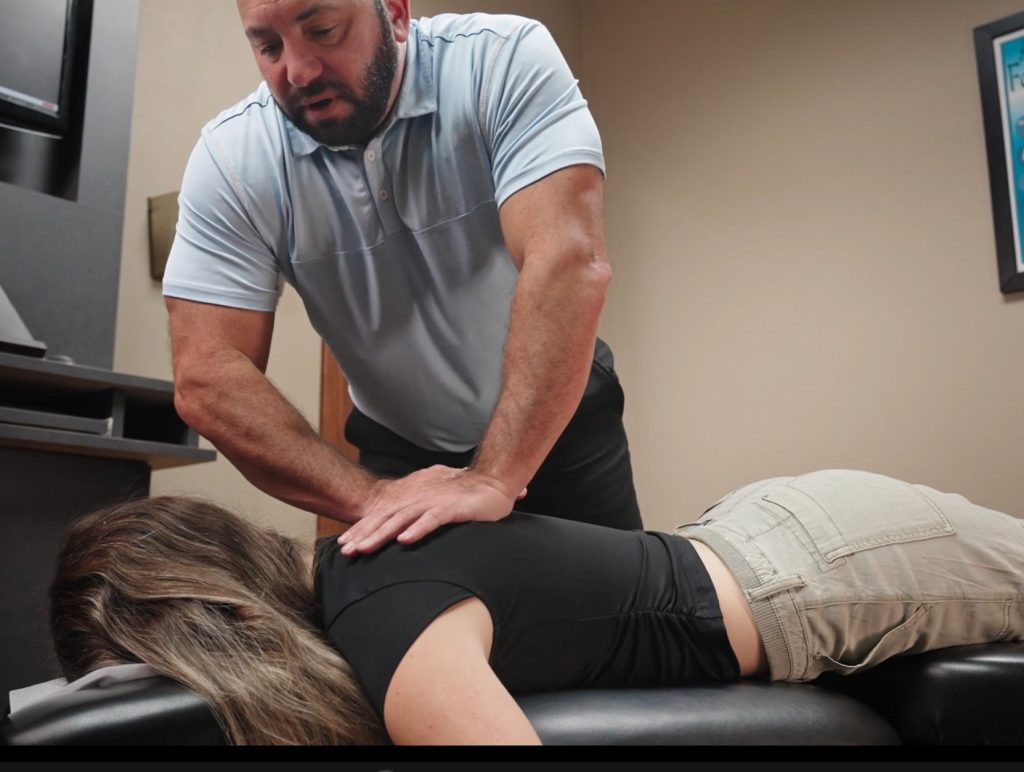
Herniated Disc Treatment
The Role of Chiropractic Care in Treating Disc Injuries
When facing a diagnosis like this, many patients assume their only options are painkillers to mask the symptoms or surgery to cut away the problem. However, medical guidelines increasingly suggest starting with conservative, non-invasive care before considering surgical intervention.
Chiropractic care focuses on the relationship between the spine and the nervous system. The goal isn’t just to alleviate the pain temporarily but to address the structural issues contributing to the disc injury.
A Drug-Free Approach
Gateway Chiropractic offers a drug-free pathway to healing. Pain medication serves a purpose, but it often comes with side effects and the risk of dependency. Furthermore, medication acts as a mute button for your body’s alarm system—it stops the noise, but it doesn’t put out the fire. Chiropractic care aims to remove the mechanical stress causing the inflammation in the first place.
Restoring Alignment
When your spine is misaligned, it places uneven pressure on your discs. Over time, this uneven load can cause the disc to bulge and eventually herniate. Chiropractic adjustments help restore proper motion and alignment to the vertebrae. By correcting these bio-mechanical faults, we can reduce the pressure on the injured disc, creating an environment where the body can heal itself naturally.
Your First Visit at Gateway Chiropractic
Walking into a new healthcare office can be stressful, especially when you are in pain. At Gateway Chiropractic, the goal is to make your first visit as seamless and comfortable as possible. Here is a step-by-step breakdown of what you can expect.
The Initial Consultation
Your visit begins with a conversation. Before looking at your back, the doctor needs to know about you. You will sit down for a one-on-one consultation to discuss your health history.
You should be prepared to answer questions such as:
- When did the pain start?
- Did a specific incident trigger it, or did it come on gradually?
- What makes the pain better or worse?
- Have you had this type of pain before?
- What are your goals for recovery?
This is your opportunity to be heard. The more details you provide, the better the chiropractor can understand the root cause of your condition.
The Comprehensive Examination
Once the history is taken, the doctor will perform a physical examination. This is distinct from a general medical checkup. It is a focused orthopedic and neurological exam designed to pinpoint the exact location and severity of the disc issue.
The exam may include:
- Range of Motion Testing: You will be asked to move your back and neck in various directions to see where mobility is restricted.
- Reflex Testing: The doctor will check your reflexes (like the knee-jerk reaction) to assess nerve function. Diminished reflexes can indicate nerve compression.
- Muscle Strength Tests: You may be asked to walk on your toes or heels, or resist pressure against your arms or legs, to check for muscle weakness associated with nerve impingement.
- Palpation: The doctor will feel your spine and surrounding muscles to identify areas of tenderness, swelling, or muscle spasm.
Diagnostic Imaging
In many cases of suspected herniated discs, the doctor may require imaging to confirm the diagnosis.
- X-rays: These are often taken on-site to view the alignment of the bones and the amount of space between vertebrae. A decrease in disc height on an X-ray is a strong indicator of disc degeneration.
- MRI: If the physical exam suggests severe nerve compression or if the X-rays are inconclusive regarding the soft tissue, you may be referred for an MRI. This is the gold standard for visualizing the disc itself and seeing exactly how it is interacting with the spinal cord and nerves.
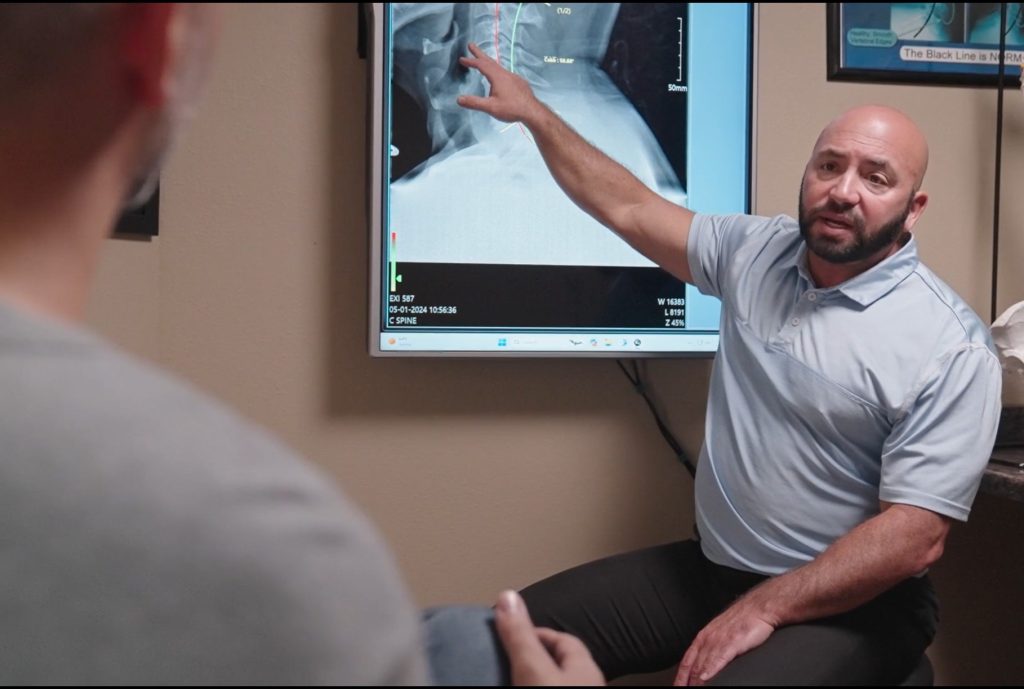
Herniated Disc Treatment Service
Personalized Treatment Plans Tailored to Your Needs
No two herniated discs are exactly alike because no two bodies are exactly alike. Once the examination is complete, the team at Gateway Chiropractic will develop a specific treatment plan for you. This is not a “one size fits all” approach; it is a customized strategy based on your age, condition, and lifestyle.
Chiropractic Adjustments
The core of the treatment is often the chiropractic adjustment, but for herniated disc patients, this is done with extreme care. The doctor may use low-force techniques to gently mobilize the joint without putting sudden stress on the injured disc. The objective is to improve joint mobility and reduce the mechanical load on the spine.
Spinal Decompression and Flexion-Distraction
One of the most effective therapies for disc injuries is spinal decompression or a technique called flexion-distraction.
- Flexion-Distraction: This involves a specialized table that gently distracts (stretches) and flexes the spine in a rhythmic motion.
- The Mechanism: This stretching creates a negative pressure (vacuum effect) within the disc. This vacuum can help pull the herniated material back into the center of the disc and off the sensitive nerve. It also draws nutrient-rich fluids into the disc, which accelerates healing.
Therapeutic Exercises and Rehabilitation
Passive treatment (what the doctor does to you) is only half the battle. Active treatment (what you do for yourself) is the other half. Your treatment plan will likely include a progression of rehabilitative exercises.
- Core Stabilization: Strengthening the abdominal and lower back muscles creates a natural “corset” that supports the spine.
- Stretching: Gentle stretching helps relieve tension in the muscles that have tightened up to protect the injury.
- Neural Flossing: Specific movements may be prescribed to help the nerve glide smoothly through the tissue, reducing irritation.
Lifestyle Modifications
Healing a herniated disc requires looking at what caused it. Was it poor posture at your desk? Incorrect lifting techniques at the gym? Your chiropractor will provide guidance on ergonomics and lifestyle changes to prevent re-injury. This might include analyzing your sleep position, your workstation setup, or your footwear.
Take the First Step Towards Healing
Living with the pain of a herniated disc can feel like your life has been put on pause. You might be skipping family activities, missing work, or giving up hobbies you love because the fear of triggering a spasm is too great. But you do not have to accept this pain as your new normal.
Chiropractic care offers a logical, effective, and safe solution for managing disc injuries. By addressing the root cause of the compression rather than just masking the symptoms, you give your body the best possible chance to heal fully.
At Gateway Chiropractic, we are dedicated to guiding you through this recovery process. From the moment you step into the office for your first visit, you will be treated with compassion and expertise. Don’t let back pain dictate your life any longer. If you are searching for “herniated disc treatment near me,” you have already found the answer.
Gateway Chiropractic
https://maps.app.goo.gl/GxjYazVHnGYNgG8b8
4070 W Spencer St, Appleton, WI 54914
(920) 944-6371
http://gatewaychiro.com/